In 2026, thought leadership content goes beyond opinions or narratives. It necessarily includes evidence-based insights. According to research, thought leadership fails in 58% content if it lacks original insights or ideas[1]. Data has become the base of credibility, such that leaders are able to show expertise, create confidence, and boost engagement.
Today's audiences seek innovative ideas, but they also expect solid evidence to support those ideas. Data-driven thought leadership empowers brands to position as authoritative voices in their industry. By blending data with strategic storytelling, businesses can build influence and enhance decision-making. It also allows leaders to stay future-ready in an evolving digital landscape.
Data-driven Thought Leadership: Meaning and Key Elements
In today’s world, thought leadership content is about backing ideas with verified data that builds authority. Data-driven thought leadership transforms perspectives into insights, helping brands influence.
In 2021, an Edelman study revealed that 87% of B2B buyers believed that thought leadership content can be rigorous and enjoyable to consume[2]. Employing this approach means using verified insights, analytics, and research to shape narratives.
Ideas become persuasive and relevant when supported by verified data. It transforms intuition into influence, helping leaders build trust, authority, and connections in a competitive marketing landscape.
Being taken seriously, however, doesn’t require a dry tone. In fact, your content needs to be a blend of data and a human touch.
Here are some key elements of a data-driven thought leadership strategy:
- Primary Research and Proprietary Data: Employ studies, surveys, or customer feedback to support your ideas.
- Industry Standards: Support your opinions with reputable third-party studies for credibility. As per a report, around 73% brands believe they will lose reputation due to poor quality thought leadership[3].
- Real-Time Metrics: Monitor performance data in real time to align strategies that satisfy growing audience demands.
- Data Storytelling: Combine hard facts with emotional narratives to make your writing engaging and harder to ignore.
- Industry Trends: Discuss and predict patterns to show authority and help your audience stay ahead of market shifts.
- Product or Service Benefits: Determine data-backed evidence that indicate the effectiveness of your product and services.
- Organisational Highlights: Highlight measurable achievements and milestones to emphasise transparency, credibility and confidence.
Why Data-Driven Thought Leadership Is Crucial in 2026
Increasing competition, unpredictability, and information overload characterise today’s market. This requires leaders to back their insights with data. There is no better way to earn trust, drive influence, and stay agile as trends shift.
Enhanced Authority and Credibility
Data-backed insights make your writing more credible and show that you are a credible industry voice.
Stronger Engagement and Audience Trust
When information is backed by solid facts, audiences develop trust, strengthening long-term credibility.
Increased Shareability
Unique insights backed by data are more likely to grab attention and encourage sharing. Posts with statistics or benchmarks get referenced in blogs, LinkedIn articles, and media stories. It naturally increases visibility and reach, whereas poorly paraphrased content can undermine credibility.
Better Decision-Making and ROI Tracking
Using analytics reveals what truly works. It provides measurable results to refine strategies and improves performance and divide resources.
Staying Agile in a Volatile Market
In a year marked by uncertainty, data gives leaders clarity and speed. It helps anticipate risks, spot emerging opportunities, and respond confidently to evolving challenges.
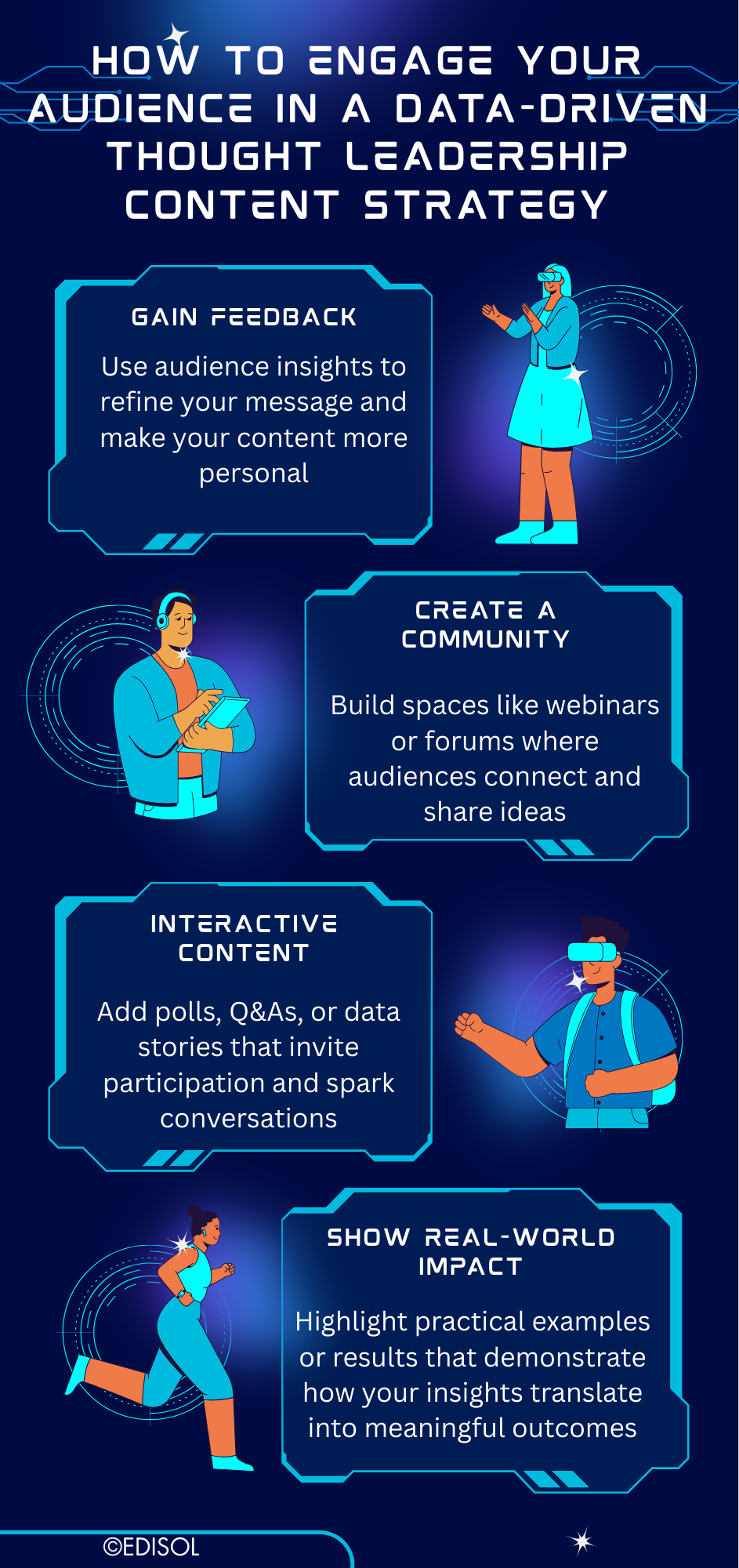
Build a Data-Driven Thought Leadership Strategy: Stepwise Guide
Data-powered thought leadership is about combining creativity with credibility. It turns numbers into narratives that inspire trust and action.
Define Your Key Mission
First, determine why you need the research. Whether for building authority, understanding trends, or shaping industry discussions. Being specific about purpose allows us to create research that aligns with business goals and what the audience cares about.
Know Your Audience
Know your audience and their concerns. Gathering information lets you gather data and ensures your research provides a solution to their needs upfront.
Create Effective Surveys
Design interesting and self-scoring surveys. Ask relevant, concise questions in plain language to gather meaningful insights from respondents.
Gather and Validate Information
Collect facts from credible sources and ensure that they are accurate. Integrate numbers with personal experience to reveal the whole perception of the subject.
See Insights, Not Numerical Value
Look beyond the raw numbers to uncover trends, patterns, and unexpected insights. This step converts raw data into useful information that informs your valuable story.
Create a Powerful Narrative
Turn your findings into a clear, compelling story that audiences can easily understand. Use pictures, charts, and storytelling to make your data easy for everyone to understand.
Present in Different Formats
Share your research through blog writing, whitepapers, videos, podcasts, and webinars. Repurposing content ensures your insights reach different audience segments in their preferred format.
Share and Get Involved
Utilise social media, email marketing, and publicity to influence reach and visibility. Start conversations, ask for opinions, and represent your brand as a source for accurate information.
Measure Impact and Iterate
Measure your impact by tracking metrics such as shares, downloads, and mentions. Lack of research can be a reason why your content may be underperforming. Use insights from the activities mentioned to strengthen your thought leadership content.
Avoiding Common Mistakes when Creating a Data-driven Thought Leadership Strategy
Even the best data-driven strategies can stumble if not executed thoughtfully. To make your data-driven mindset come alive in your content marketing strategy, it is vital to know common pitfalls:
- Many leaders treat data as an afterthought, acting reactively instead of strategically. Integrate data discussions early by connecting business goals with measurable outcomes across departments.
- Not every organisation is fully prepared to be data-driven. Jumping in without proper systems or processes can create inefficiencies. Build readiness and start with consistent data reviews, and ensure metrics are updated and accessible.
- It is easy to get lost in dashboards without knowing what matters. Start with clear questions and focus on insights that drive strategic outcomes, not just numbers.
- Too many stats can be overwhelming. Simplify your storytelling and use only the most relevant data points that enhance your message.
- Outdated or inaccurate information can damage credibility. Verify your sources and rely on trusted, verifiable datasets to maintain integrity.
- Remember to weave your story in a human context, harnessing emotion and storytelling. The best insights resonate when they connect data with real-world impact.
In 2026, data-driven thought leadership is no longer optional. It blends insights with strategy to create content that informs, inspires, and influences. The secret is using data to truly understand your audience, sharpen your message, and lead with confidence.
If you are ready to take your thought leadership content strategy to the next level, Edisol can help. Our experts can help you identify gaps, create research-backed narratives, and help you connect data with storytelling that drives results. Contact us to learn how we have helped brands turn insights into influence.
Frequently Asked Questions
What is the difference between traditional and data-driven thought leadership content?
Traditional thought leadership often relies on personal experience, opinions, or intuition. Data-driven thought leadership uses verified data, research, and analytics to support insights. This approach ensures that ideas resonate with audiences.
How does data improve decision-making in thought leadership?
Data helps identify trends, measure audience engagement, and confirm ideas before sharing. By grounding content in evidence, leaders can make informed decisions and deliver actionable insights.
How can businesses gather the right data for thought leadership content?
Gather data through surveys, customer feedback, proprietary research, industry reports, and analytics tools. What matters most is the accuracy, relevance, and reliability of the data used to support insights.
What types of content can use a data-driven approach?
Blog articles, whitepapers, research reports, case studies, social media posts, videos, podcasts, and webinars can all benefit from data-backed storytelling. Data enhances clarity, credibility, and engagement across formats.
How does data-driven thought leadership content help brands grow?
By grounding ideas in evidence, brands build stronger credibility and trust. This leads to higher engagement, better decision-making, more shareable content, stronger customer relationships, and greater influence in their industry.


